

About
Adults with disabilities report experiencing frequent mental distress almost 5 times as often as adults without disabilities. Call your doctor if your mental health gets in the way of your daily activities for at least 14 days in a month.
December 3rd is International Day of Persons with Disabilities. In the United States, more than 1 in 4 adults have a disability. Many people will experience a disability at some point during their lives. Disabilities limit how a child or adult functions. These limitations may include difficulty walking or climbing stairs; hearing; seeing; or concentrating, remembering, or making decisions.
Although “people with disabilities” sometimes refers to a single population, this is a diverse group of people with a wide range of needs. Two people with the same type of disability can be affected in very different ways. Some disabilities may be hidden or not easy to see.
Many adults with disabilities report frequent mental distress
A CDC study found that adults with disabilities report experiencing more mental distress than those without disabilities.1 In 2018, an estimated 17.4 million (32.9%) adults with disabilities experienced frequent mental distress, defined as 14 or more reported mentally unhealthy days in the past 30 days. Frequent mental distress is associated with poor health behaviors, increased use of health services, mental disorders, chronic disease, and limitations in daily life.1
During the COVID-19 pandemic, isolation, disconnect, disrupted routines, and diminished health services greatly impacted the lives and mental well-being of people with disabilities.2
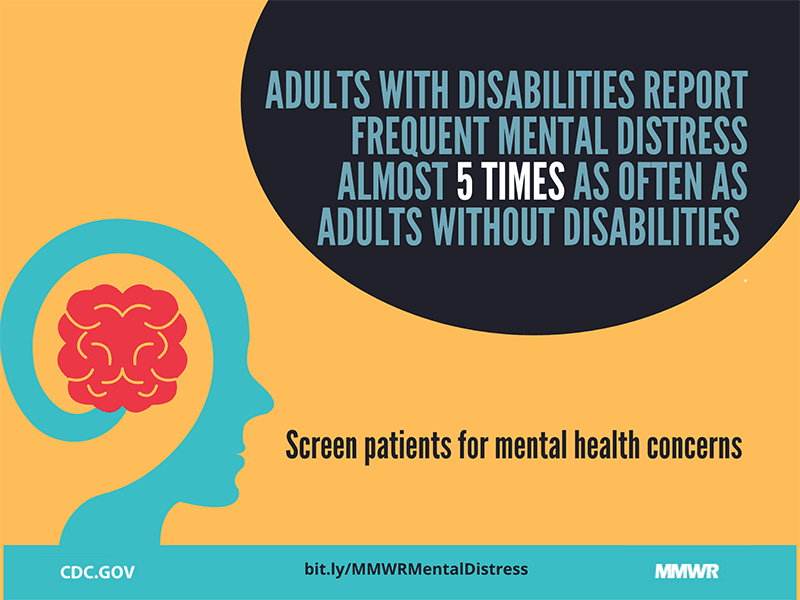
Call your healthcare provider if stress gets in the way of your daily activities for several days in a row. Free and confidential resources can also help you or a loved one connect with a skilled, trained counselor in your area.
It’s okay not to feel okay
Everyone reacts differently to stressful situations. How you respond to stressful situations, such as the COVID-19 pandemic, can depend on your background, your support systems (for example, family or friends), your financial situation, your health and emotional background, the community you live in, and many other factors.
People with disabilities or developmental delays may respond strongly to the stress of a crisis, particularly if they are also at higher risk for serious illness from COVID-19 and other respiratory viruses (for example, older people and people of any age with certain underlying medical conditions).
Healthy ways to cope with stress
- Know what to do if you are sick and are concerned about COVID-19. Contact a health provider before you start any self-treatment for COVID-19.
- Know where and how to get mental health treatment and other support services and resources, including counseling or therapy (in person or through telehealth services).
- Take care of your emotional health. Taking care of your emotional health will help you think clearly and react to urgent needs to protect yourself and your family.
- Take breaks from watching, reading, or listening to news stories, including those on social media. Hearing about the pandemic repeatedly can be upsetting.
- Take care of your body.
- Make time to unwind. Try to do some other activities you enjoy.
- Connect with others. Talk with people you trust about your concerns and how you are feeling. During times of increased social distancing, people can still maintain social connections and care for their mental health. Phone calls or video chats can help you and your loved ones feel socially connected, less lonely, or isolated.
- Connect with your community- or faith-based organizations. While social distancing measures are in place, consider connecting online, through social media, or by phone or mail.
Improving the mental health of people with disabilities
CDC provides funding for two National Centers on Disability that focus on improving the quality of life for people living with disabilities.
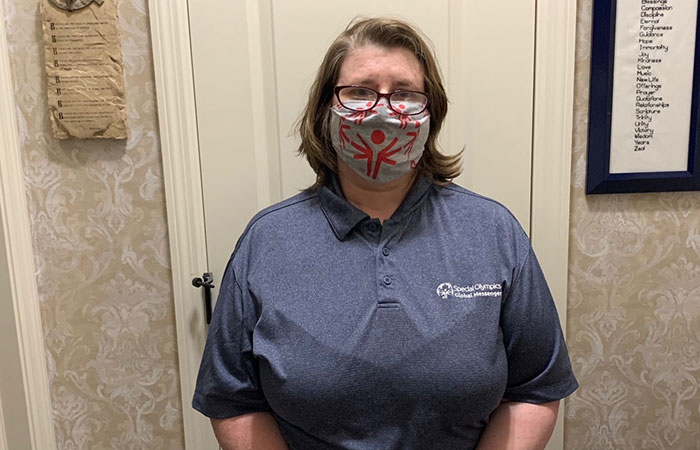
Special Olympics’ Inclusive Health programming focuses on improving the physical and social-emotional well-being of people with intellectual disabilities by increasing inclusion in health care, wellness, and health systems for Special Olympics athletes and others with intellectual disabilities.
Special Olympics’ Strong Mindfulness program offers free, 1-hour mindfulness sessions for people with intellectual disabilities and their families. Participants learn deep breathing techniques, body awareness and progressive muscle relaxation, mindful movement, and guided meditation. They also receive a Strong Minds Activity Guide designed to help them develop their coping skills in everyday life.
The National Center on Health, Physical Activity and Disability (NCHPAD) seeks to help people with disabilities and other chronic health conditions achieve health benefits through increased participation in all types of physical and social activities. NCHPAD’s M.E.N.T.O.R program, which stands for Mindfulness, Exercise and Nutrition to Optimize Recovery, takes a holistic approach to restoring, improving, and protecting health. The program divides health into three domains: physical, mental, and emotional. Through this program, people who have acquired a new disability (for example, spinal cord injury, stroke, traumatic brain injury), a new diagnosis (for example, multiple sclerosis, Parkinson’s disease), or have a congenital condition (for example, cerebral palsy, spina bifida) learn the many ways life can be enhanced through health and wellness activities.
Disability and mental health resources
As CDC honors International Day of Persons with Disabilities, we ask that you join us in being a part of the global movement to change attitudes toward, and promote the inclusion of, people with disabilities.
link